
Gyala’s lead program is GYA01, a first-in-class CAR-T cell therapy targeting CD84
CD84 is a novel therapeutic target in acute myeloid leukemia (AML) and T-cell acute lymphoblastic leukemia (T-ALL), based on its overexpression in malignant cells relative to healthy cells.
It has been implicated in leukemia cell survival through the regulation of metabolic and antioxidant pathways, and targeting this antigen with CAR T-cells has demonstrated robust anti-leukemic activity across multiple preclinical models.
PRODUCT
GYA01
INDICATION
Acute myeloid leukemia (AML) and T-cell acute lymphoblastic leukemia (T-ALL)
PRECLINICAL
PHASE I
PHASE II
GYA01 is currently being evaluated in a Phase I clinical trial in patients with relapsed or refractory AML. Further information about the clinical trial, including participating centers, is available here.
CAR-T therapies
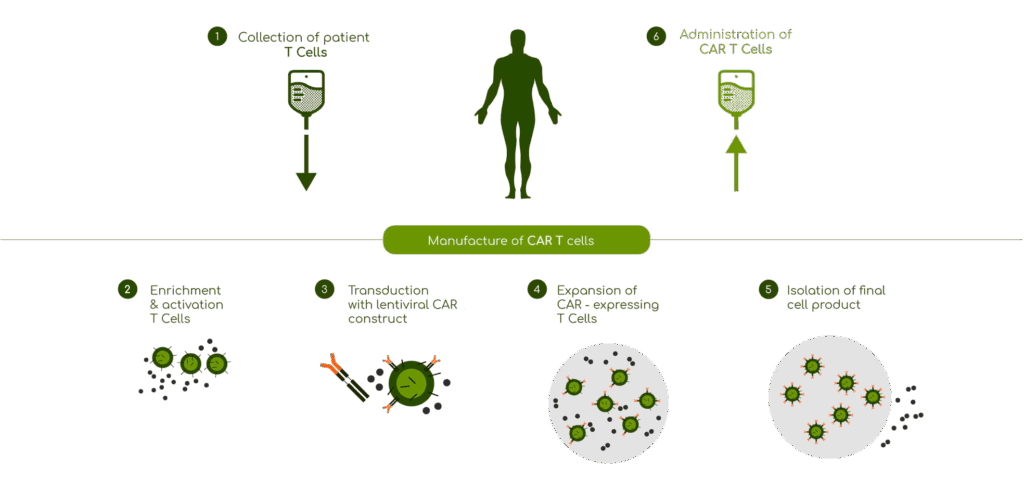
Chimeric antigen receptor (CAR) T-cells are a form of cell therapy in which a patient’s own T cells are genetically modified to recognize and target tumor cells. During manufacturing, T cells are engineered to express a chimeric antigen receptor (the “CAR”) that binds to a specific protein on the surface of cancer cells. After infusion back into the patient, CAR T cells can selectively recognize tumor cells and mediate their elimination. Several CAR-T cell therapies have demonstrated clinical benefit in the treatment of B-cell leukemias and lymphomas and have been approved by the European Medicines Agency (EMA) and the U.S. Food and Drug Administration (FDA).
Acute myeloid leukemia (AML) is a rare and aggressive hematologic malignancy, with an incidence of approximately 5 per 100,000 people in Europe and over 20,000 new cases annually.
The disease predominantly affects older adults, with a median age at diagnosis of around 70 years.
Despite initial remission with chemotherapy, 30–50% of patients relapse after first-line treatment, and up to 40% of older patients experience primary refractory disease. Prognosis in the relapsed/refractory (R/R) setting is poor: response rates to low-intensity therapies such as azacitidine or decitabine are below 25%, and median overall survival in second or third relapse is often limited to 3–6 months.
Allogeneic stem cell transplantation (allo-HSCT) offers a potential cure but is only feasible for a subset of fit patients, and relapse post-transplant remains common.
Given the limited efficacy of current therapies and the absence of a standard salvage regimen, R/R AML represents a high unmet medical need. Novel approaches like CAR-T cell therapies targeting new antigens offer the potential to induce durable remissions and serve as a bridge to curative transplantation.
For further information visit Portal Clinic and American Cancer Society websites.
T-cell acute lymphoblastic leukemia (T-ALL) accounts for 10–15% of paediatric and up to 25% of adult ALL cases, with an annual incidence of approximately 1.8 per 100,000 overall and up to 5 per 100,000 in children.
While survival rates exceed 90% in paediatric patients treated with frontline chemotherapy, outcomes in adults remain suboptimal, with long-term survival around 40–50%.
For patients with relapsed or refractory disease, prognosis is particularly poor: survival rates fall below 25%, and treatment options are limited. Successful reinduction is a prerequisite for stem cell transplantation, currently the only curative option, yet remission rates in this setting are low. Complications associated with allo-HSCT—such as infections and graft-versus-host disease—further limit its use. Unlike B-ALL, T-ALL has seen few therapeutic innovations due to the lack of tumour-specific targets and risks of fratricide in T-cell–directed therapies.
Therefore, the development of CAR-T cell therapies targeting novel, lineage-restricted antigens is urgently needed to expand treatment options and improve outcomes in this high-risk population.